The moment that gave me away
I’m thinking back on this moment, and I’m cringing. I must have been about ten, probably frustrated, as usual, with my sister. She would’ve been around six, wanting attention and wanting to play. And I, as usual, wanted to be left alone. I turned to my father and said, “If she doesn’t start reading and doesn’t start to like books, how is she going to survive in this family?”
By then, I had already built a relationship with reading, with books, with words, and it has served me well ever since.
A family built on books
I had also, clearly, developed some early snobbery, or maybe just irritation. But if I’m being kind to myself, my love for the written word had already built a small temple in my mind. Reading was where things made sense. Now I find myself watching my daughter build her own relationship with it.
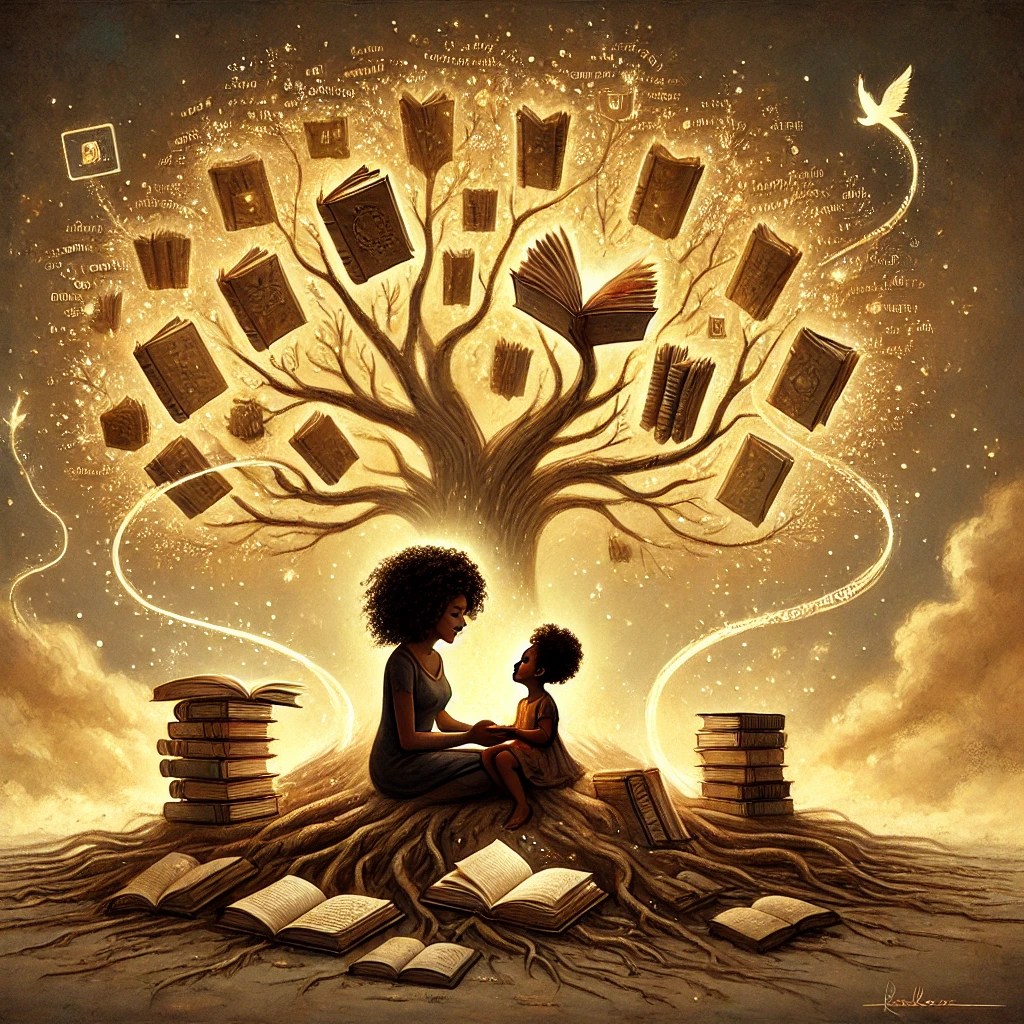
We’ve always been a family that loves reading. My homes, wherever they’ve been, have always had books. Fewer now; we’ve donated many in the name of decluttering. Still, once upon a time, cupboards were stuffed, shelves sagged, and we were forever borrowing or lending. I like to think it’s always been obvious to her that our family carries a quiet, ongoing affection for words.
The anxiety of waiting
Even so, I’ve been anxious, especially when I noticed that her school had started teaching reading and writing more intentionally. Would she fall in love with it too? Her school is nothing like the one I went to, and I’ve resisted the urge to intervene. I wanted to see what would happen if I didn’t. Then, of course, I started worrying that I looked disengaged.
And yes, the comparisons crept in. Wasn’t I reading Noddy at her age? Why aren’t they moving faster? Then I told myself to leave it alone.
Audiobooks, screens, and other modern heresies
When she was four or five, I tried audiobooks: The Little Prince, Peter Pan, and Winnie the Pooh. It wasn’t so much about what she listened to as it was about listening to stories at all. And it didn’t land. Which scared me. Who doesn’t love stories?
But she did love stories, just not in the form I expected. She could watch a Netflix series from start to finish without blinking. Which sent me straight into the usual panic: too much screen time, not enough reading. So, as one does, I restricted the screens.
At some point, I had to throw out all the questions about whether her choices were “African enough”, “Black enough”, or “socially conscious enough”. The real question was simpler: was she learning to love words? I wasn’t sure. So I waited. We all did, in our slightly scrambled version of normal.
The vanishing bookshelf
“In our time,” my father would say, “we had physical books.” You could see when someone was reading. Now, most of my collection is digital, like my mother’s, my sister’s, and my brother-in-law’s. If not e-books, then audiobooks. My father is the last holdout.
It’s strange, though, how the form changes the relationship. Like music. Once, you could tell who someone was by the CDs on their shelf. Now, our tastes live invisibly in clouds and playlists. You can’t tell what someone’s reading until they tell you. Our private libraries have vanished from view. Maybe that’s another essay.
Reading behind glass
Meanwhile, another dilemma emerged. I read mostly on my phone. I like the convenience and constant access. But to a child, it’s not obvious what you’re doing. They see you staring at a screen, maybe playing a game, maybe scrolling. You might be deep in a novel, but to them, it’s just more screen time. So what do you do? Go back to paper books? Pretend you’re not a millennial who loves her devices?
To balance things, I bought her physical books. Maybe the damage was already done, but at least she’d see books lying around. And sure enough, she loved the feel of them, the pages, the pictures, and the pointing at words she half-understood. I thought, maybe this is enough for now.
The slow, quiet magic
Then, slowly, things shifted. She started sounding out words. Later, she wanted to write letters properly, to copy what she’d read. Connections started forming right in front of me.
It’s something to watch literacy happen up close. When you’re becoming literate, you can’t see it. You are it. Even the idea of noticing it requires literacy. Watching it bloom in someone else feels like a small privilege.
The first portal
My own doorway into imagination was Enid Blyton. Problematic as she may be now, her books—The Faraway Tree, The Wishing Chair, Malory Towers—were how I learnt to imagine other places and other ways of being. That’s where my love of fantasy probably began. The stories offered escape, freedom, and adventure. They made the world bigger. And from there grew a fascination with how differently people could think, live, or dream.
Enter Harry Potter
So it shouldn’t surprise me that my daughter’s first real “Oh my God, I can’t stop” moment came with Harry Potter. Watching her fall into it, hearing her thoughts—thoughts I never had at her age—was surreal. How could she see so much at eight? I was astonished, and yes, embarrassingly proud.
When she asked, “How can an entire chapter be about the Sorting Hat? Isn’t that a waste of a chapter?” I laughed. I’d never even thought to ask that, and I was in university when I first read it. What an incisive question from an eight-year-old.
Yes, I’m humble-bragging.
Full circle
It turns out I never needed to worry about my sister either. The reading bug caught her and never let go.
Now, I’m staring down the barrel of a Harry Potter audiobook-athon, soon to be a readathon, I’m sure. But not before surviving the movie marathon. Because now, of course, children’s books don’t just live in our heads; they live on screens too.
I only hope they never make movies of The Faraway Tree.
 Where Words Take Root
Leave a comment